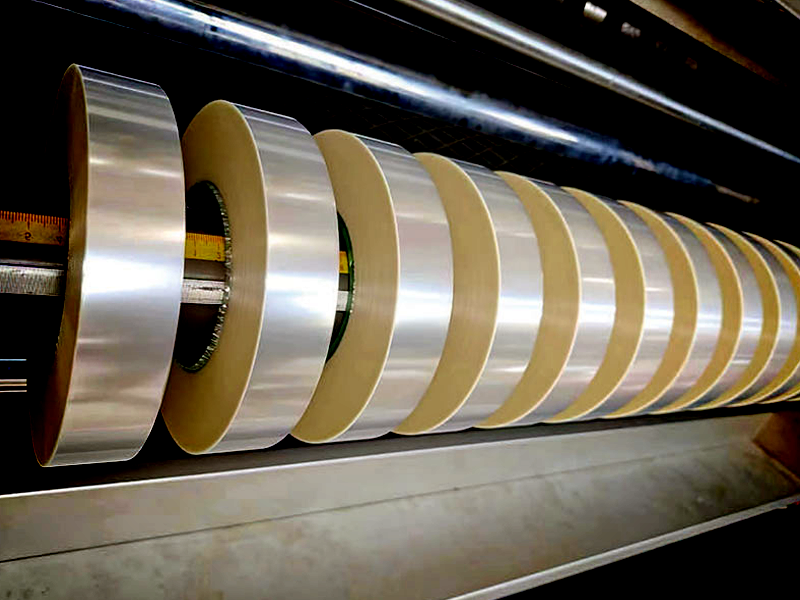
The Best Clear BOPP Films Are the Ones You Don’t Notice

In a market driven by datasheets, performance claims, and price pressure, it’s easy to assume that the “best” clear BOPP film is the one with the most impressive specifications. But in real-world production environments, the opposite is often true.
The best clear BOPP films are the ones you don’t notice.
Not because they lack performance—but because they deliver it so consistently that they disappear into your process. No constant adjustments. No operator second-guessing. No unexpected downtime. Just stable, repeatable results shift after shift.

What “Unnoticeable” Performance Actually Means
When converters and printers talk about a film “running well,” they’re not referring to a single attribute. They’re describing a combination of factors that work together to create a predictable, efficient process.
A high-performing clear BOPP film should provide:
Consistent machinability across different equipment and speeds
Stable coefficient of friction (COF) for reliable feeding and handling
Strong, repeatable seal integrity without constant recalibration
Optical clarity that enhances product visibility without distortion
Gauge consistency that eliminates variation across runs
Individually, these characteristics are expected. But the difference between an average film and a high-performing one is how consistently these properties hold over time.
The Hidden Cost of “Noticeable” Films
Films that demand attention often create more problems than they solve. Even minor inconsistencies can ripple through production, leading to:
Increased setup times
Frequent machine adjustments
Material waste from trial-and-error calibration
Reduced line speeds
Operator frustration and inefficiency
These issues rarely show up on a datasheet, but they directly impact throughput, labor costs, and overall profitability.
In contrast, a film that runs cleanly and predictably allows your team to focus on output—not troubleshooting.
Why Consistency Matters More Than Peak Performance
It’s easy to be impressed by a film that performs exceptionally well under ideal conditions. But packaging production rarely operates in a controlled, static environment.
Temperature changes. Equipment varies. Operators rotate. Production demands shift.
A truly reliable clear BOPP film is one that maintains its performance across these variables. It doesn’t require constant tuning or oversight. It adapts to the realities of your operation without compromising quality.
That’s what separates theoretical performance from operational performance.
Clarity Beyond Appearance
When people think of “clear” BOPP films, they often focus on visual transparency. While optical clarity is important—especially for retail packaging—it’s only part of the equation.
Operational clarity is just as critical.
This includes:
Smooth web handling without sticking or slipping
Predictable tension control across runs
Clean release characteristics during processing
Reliable interaction with inks, adhesives, and laminations
When these elements align, the film becomes effectively invisible within your workflow. It doesn’t interrupt, slow down, or complicate your process.
The Role of Material Testing and Real-World Validation
Not all BOPP films are created equal, even when they appear similar on paper. Differences in resin selection, extrusion processes, surface treatment, and quality control can significantly impact performance.
That’s why real-world testing matters.
Films that have been trialed across multiple machines, applications, and operating conditions are far more likely to deliver consistent results. They’ve already been exposed to the variables your production team faces every day.
This level of validation reduces risk and shortens the learning curve when introducing new materials.
Integration Over Specification
For many buyers, the decision process starts with comparing technical specifications—gauge, yield, COF ranges, and so on. While these metrics are important, they don’t tell the full story.
The more important question is:
How well does this film integrate into your existing process?
A film that meets every spec but requires constant adjustments is ultimately less valuable than one that fits seamlessly into your operation.
The goal isn’t to find the most impressive film on paper. It’s to find the one that works—consistently, predictably, and without disruption.
A Practical Standard for Evaluating Clear BOPP Films
If you’re assessing clear BOPP films for your operation, consider shifting your evaluation criteria from “maximum performance” to “minimum friction” within your workflow.
Ask:
Does this film run consistently across different shifts and operators?
Does it maintain stable performance at varying speeds?
Does it reduce the need for machine adjustments?
Does it integrate cleanly with our existing materials and processes?
Does it allow us to maintain or increase throughput without added complexity?
If the answer to these questions is yes, you’re likely working with a film that will deliver long-term value.
The StockPKG Films Approach
At StockPKG Films, the focus isn’t on supplying films that stand out in theory—it’s on delivering materials that perform reliably in practice.
That means:
Films that have been tested across multiple machine types and applications
Consistent quality control across stocked inventory
Materials designed to integrate seamlessly into existing production environments
Support that prioritizes operational efficiency, not just product specs
The objective is straightforward: provide films that allow your operation to run smoothly, without unnecessary intervention.
Final Thought
In high-speed, high-demand production environments, attention is a limited resource. Every moment spent adjusting materials is a moment not spent producing.
The best clear BOPP films respect that reality.
They don’t demand attention. They don’t introduce variability. They don’t slow you down.
They simply perform—quietly, consistently, and reliably.
And that’s exactly why you don’t notice them.